

What is God's Purpose for Us in Marriage?
What are the keys to a successful marriage? It all begins with understanding what God's purpose is for marriage as laid out in the Bible.
August 15, 2025

Author, Speaker
Publisher
Lorem ipsum dolor sit amet consectetur. Posuere odio consequat mattis elit. Velit aliquet sed pretium suscipit suspendisse tortor enim. Odio tempus sed dictum hac at enim ut ornare dignissim. Dictumst feugiat porttitor maecenas quisque. Purus pulvinar suscipit consequat morbi egestas. Neque nunc fusce porttitor suspendisse venenatis sit id at tristique. Suspendisse adipiscing nulla imperdiet vel urna. Ullamcorper lectus ultricies nisl nisl hendrerit elementum.





Hezekiah (1)
hez-ē̇-kı̄´a (חזקיּה, ḥizḳı̄yāh):
(1) King of Judah. See special article
(2) A son of Neariah, of the royal family of Judah (1 Chr 3:23, the Revised Version (British and American) “Hizkiah”).
(3) An ancestor of Zephaniah (Zeph 1:1, the King James Version “Hizkiah”).
(4) One of the returned exiles from Babylon (Ezra 2:16; Neh 7:21).
Hezekiah (2)
(חזקיּה, ḥizḳı̄yāh, “Yahweh has strengthened”; also written חזקיּהוּ, ḥı̄zḳı̄yāhū, “Yah has strengthened him”; Ἑζεκίας, Hezekı́as): One of the greatest of the kings of Judah; reigned (according to the most self-consistent chronology) from circa 715 to circa 690 bc.
On the Old Testament standard of loyalty to Yahweh he is eulogized by Jesus Sirach as one of the three kings who alone did not “commit trespass” (Sirach 49:4), the other two being David and Josiah. The Chronicler represents him (2 Chr 32:31) as lapsing from the wisdom of piety only by his vainglory in revealing the resources of his realm to the envoys of Merodach-baladan. In 2 Kgs 18:5, the earliest estimate, his special distinction, beyond all other Judean kings, before or after, was that he “trusted in Yahweh, the God of Israel.” It is as the king who “clave to Yahweh” (2 Kgs 18:6) that the Hebrew mind sums up his royal and personal character.
I. Sources for His Life and Times
1. Scripture Annals
The historical accounts in 2 Ki 18-20 and 2 Ch 29-32 are derived in the main from the same state annals, though the latter seems also to have had the Temple archives to draw upon. For “the rest of his acts” 2 Ki refers to a source then still in existence but now lost, “the book of the chronicles of the kings of Judah” (2 Kgs 20:20), and 2 Chronicles to “the vision of Isaiah the prophet the son of Amoz, in the book of the kings of Judah and Israel” (2 Chr 32:32). In this last-named source (if this is the original of our Book of Isa.), besides the warnings and directions called out by the course of the history, there is a narrative section (Isa 36-39) recounting the Sennacherib crisis much as do the other histories, but incorporating also a passage of Isaianic prophecy (Isa 37:22-32) and a “writing of Hezekiah king of Judah” (Isa 38:10-20). Lastly, in Sirach 48:17-25, there is a summary of the good and wise deeds of Hezekiah, drawn from the accounts that we already have.
2. View-Point and Coloring
Of these sources the account in 2 Kings is most purely historianic, originating at a time when religious and political values, in the Hebrew mind, were inseparable. In 2 Ch the religious point and coloring, especially in its later developed ritual and legal aspects, has the decided predominance. Sirach, with the mind of a man of letters, is concerned mainly with eulogizing Hezekiah. in his “praise of famous men” (compare Sirach 44 through 50), of course from the devout Hebrew point of view. In the vision of Isaiah (Isa 1 through 39), we have the reflection of the moral and spiritual situation in Jerusalem, as realized in the fervid prophetic consciousness; and in the prophecy of his younger contemporary Micah, the state of things in the outlying country districts nearest the path of invasion, where both the iniquities of the ruling classes and the horrors of war were felt most keenly. Doubtless also many devotional echoes of these times of stress are deducible from the Psalms, so far as we can fairly identify them.
Watch a variety of biblical teachings, sermons, and faith-centered discussions. Each video is accompanied by a transcript to enhance your learning and study experience.
What are the keys to a successful marriage? It all begins with understanding what God's purpose is for marriage as laid out in the Bible.
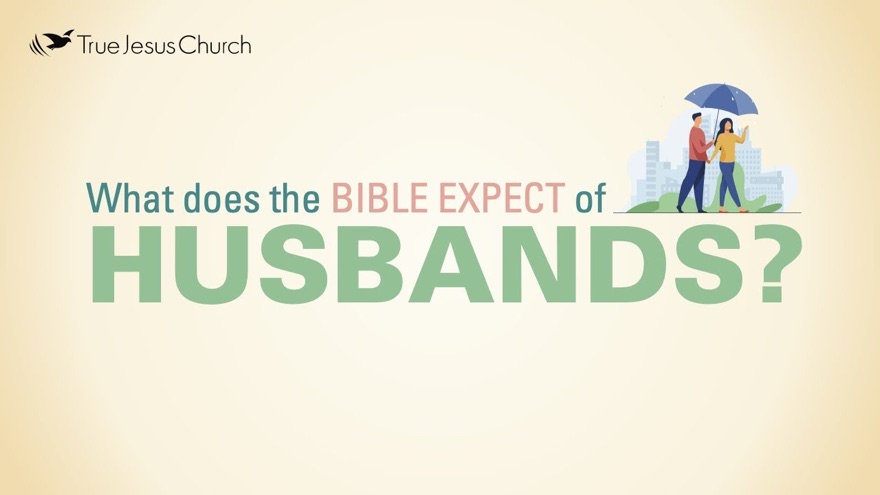
Christ loved the church by giving Himself for her, to the point of giving up His life, and He expects husbands to love their wives in the same way.
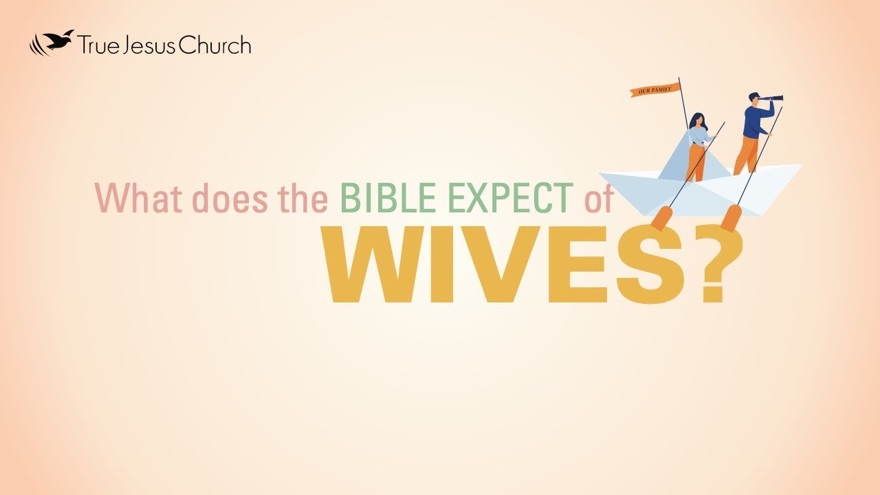
In a world of freedom and equality, submission seems to be outdated. But the Bible teaches wives to submit to and respect their husbands.
Watch a variety of biblical teachings, sermons, and faith-centered discussions. Each video is accompanied by a transcript to enhance your learning and study experience.
What are the keys to a successful marriage? It all begins with understanding what God's purpose is for marriage as laid out in the Bible.
Christ loved the church by giving Himself for her, to the point of giving up His life, and He expects husbands to love their wives in the same way.
In a world of freedom and equality, submission seems to be outdated. But the Bible teaches wives to submit to and respect their husbands.